Essential artefacts for workshop sessions

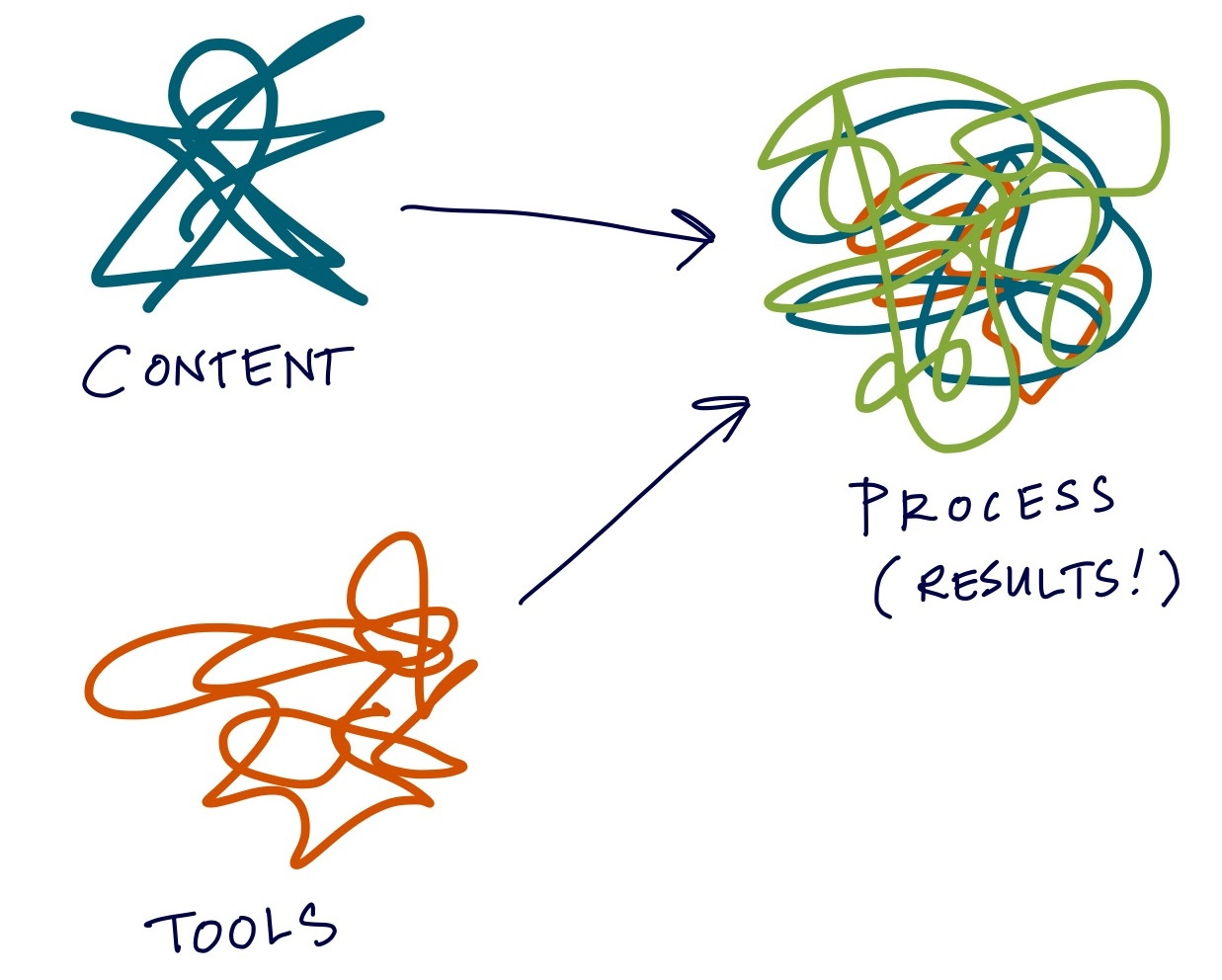
Lately I’ve run a number of sessions to process ideas and strategies. Often there’s a strategy that’s largely agreed and the team needs options, interventions or activities to implement that strategy. It got me thinking about the three main kinds of artefacts that make these sessions successful: content artefacts, tool artefacts, and process artefacts.
Content Artefacts
Material collected or prepared in advance that you will work on during the session.
These are artefacts that communicate the content of the workshop. What ideas or challenges are you working on during the session? These might be pieces of information or ideas that you’ve gathered in advance. For example, maybe you have a strategy summarized in a short document and the session is to generate ideas for implementing the strategy. It can be useful to allow 5-7 minutes for everyone to read the strategy at the beginning. This follows the Amazon corporate idea that everyone should “read the memo” at the start of the meeting. This micro “study hall” gets everyone on the same page, focused, and refreshed on the strategy.
Other content artefacts could include a short verbal or slide overview of the strategy to bring everyone onto the same page.
If you collected ideas from participants in advance, you’ll need a way to process these and play them back at the start of the session. This could also take the form of a micro “study hall” or a “gallery” using posters or sticky notes spaced to allow viewing.
Tool artefacts
Materials used to do the work
Tools include things like sharpie pens (for readable notes), sticky notes in variable sizes/colors, or large sheets of paper for mapping. You might need cardboard or paper for building low-fidelity models. If you’re using digital tools (such as an online whiteboard like Mural) then you need all participants to have the right devices and access. If it’s a Lego Serious Play session, you need the bricks. Maybe you’ll have a talking stick. And so on.
I usually always have scissors, blu tack, tape, and dots (for voting or otherwise marking things). Other “tools” are things like name tags, signs to the room, (potentially signs in the room). Could we call food and beverages “tools”? I think so.
Process Artefacts
Materials generated through the work of the session
People use the tools to act on the content an create new stuff, the results of the your session.
People may be generating ideas in response to a challenge. They may prioritise or elaborate on the ideas collected from participants in advance. They may develop implementation steps. Having small groups articulate workable steps often highlights different interpretations of the same idea. Here are some other ways you might generate process artefacts:
Cluster ideas—once ideas are up on the wall, the group may move them around into thematic clusters, prioritized lists, or put them on a timeline (It’s why we use the sticky notes)
Vote on ideas—people use dots to vote on their preferred options creating a heat map (how are people feeling about the landscape of ideas) or as a basis for making decisions
Build a simple prototype of an idea to test it
Develop an experiment for testing an idea over a period of several weeks or months
Make drawings, storyboards, or diagrams as a way of generating ideas
These artefacts are the original, new material that your participants create (alongside the social and conceptual work). At the end it’s great to draw attention to the amount of work – look at what they’ve accomplished! – and acknowledge that this kind of focused thinking is hard work.
Preserve the artefacts
These three types of artefacts, typically captured through notes, documents, video recording or photographs, tell the story of your work. They form the basis of your conclusions and next steps. They can be used in a lot of different ways, such as a final report, shared “pull quotes” to keep the momentum going, images that summarize a direction, or source material for developing new products or programs.
So there you have it, the archaeology of facilitated sessions. Do you have a favorite artefact from past experience?