
Scaling Serious Play
How Lego Serious Play holds up in a room of 150
Things have been lively on the Lego Serious Play (LSP) front. LSP is a method of using model-building at work to enhance thinking, communication, and problem solving. (If you’re new to LSP, see the explainer at the end). I joined the inaugural community meeting of UK Certified LSP Facilitators in Manchester in June. In addition to some great presentations (on agile retrospectives, strategy development, inclusive workplaces, aggressive sales goals, and more), they also had nice swag:
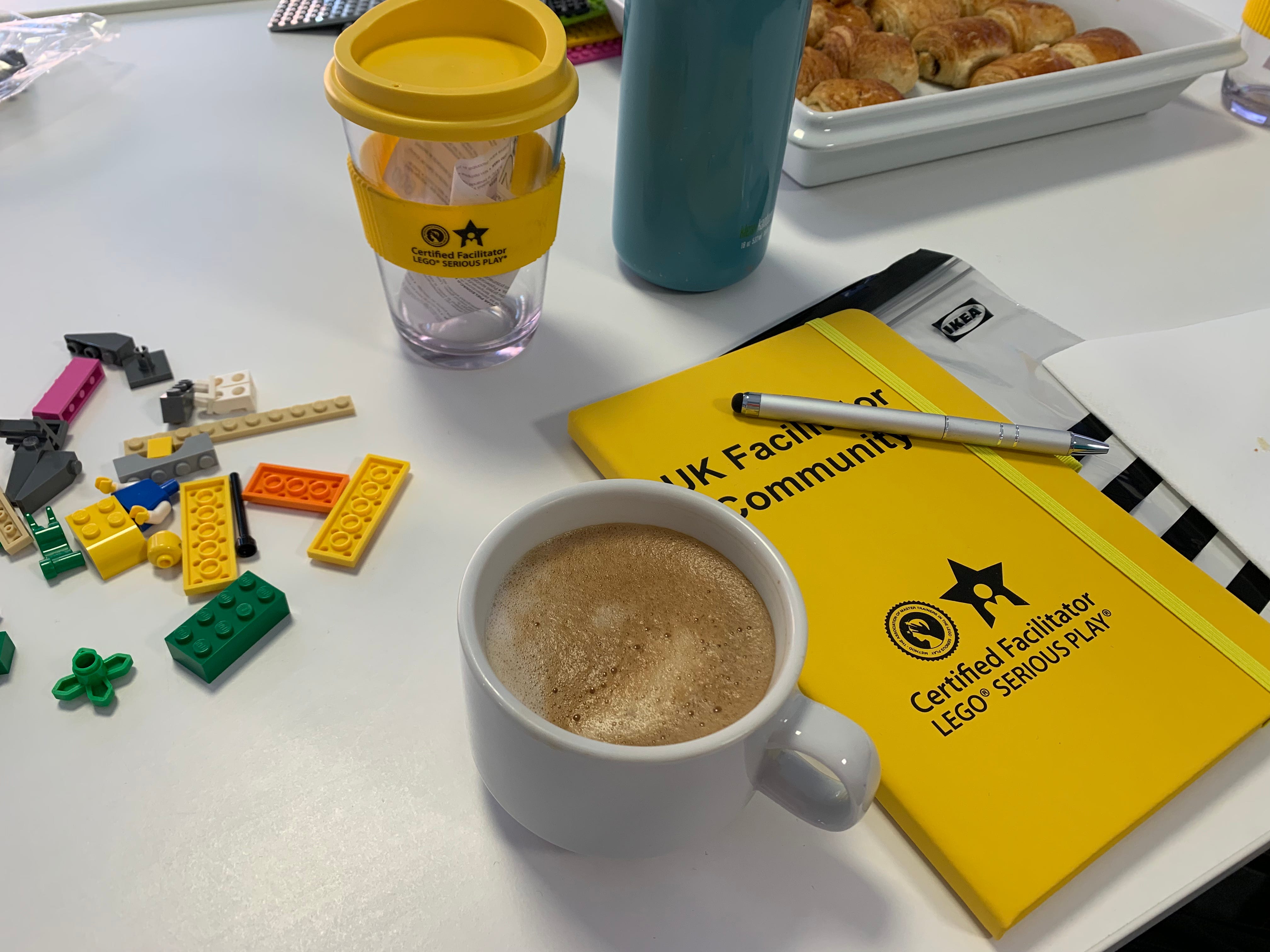
One of the presentations covered “large group” LSP. It might surprise you that LSP sessions can accommodate one hundred people or more. The largest I’ve heard of is 600! These sessions can be short tasters, but occasionally they involve full-day working sessions (with a careful strategy for multiple facilitators and enough bricks).
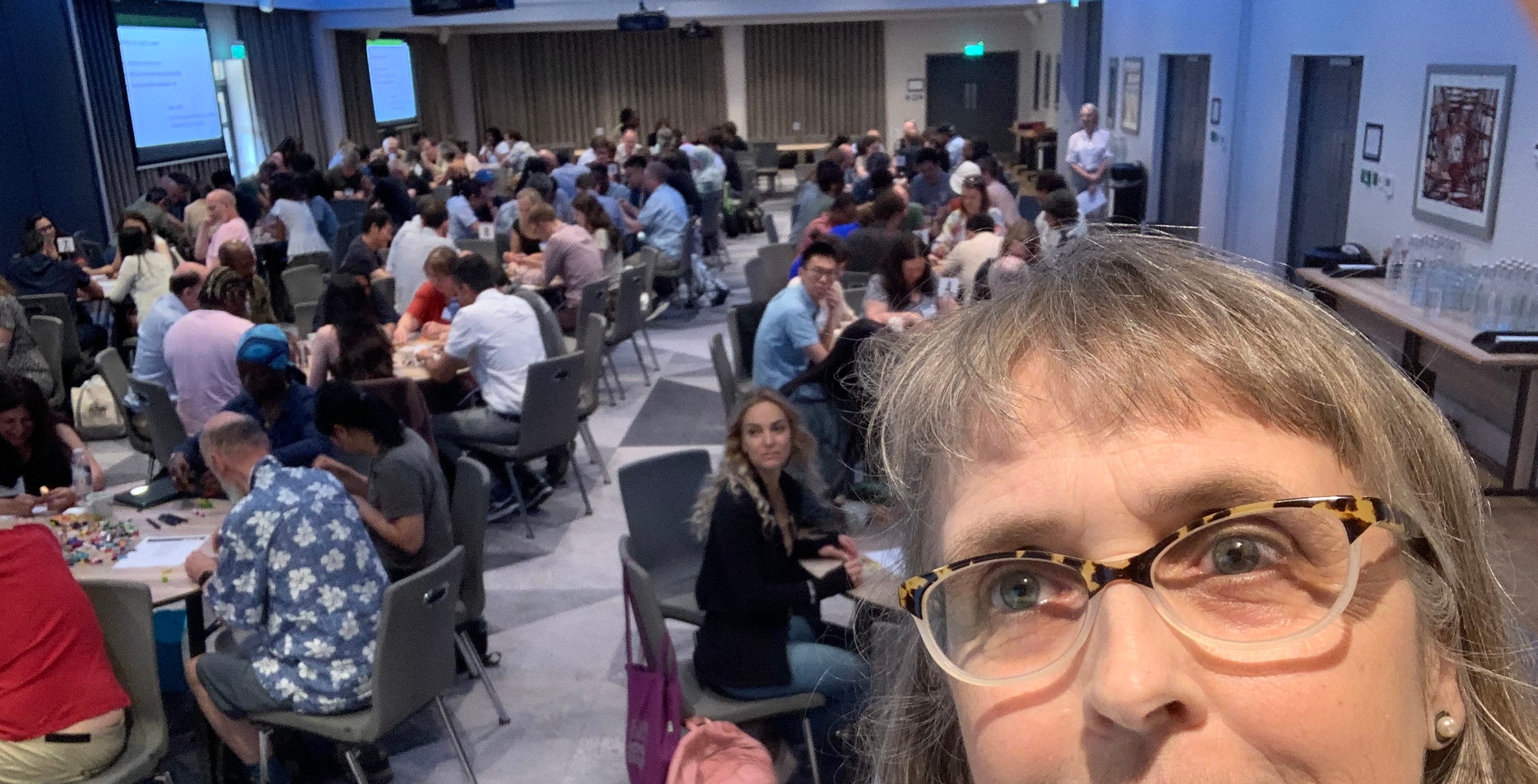
Coincidentally, shortly after the Manchester event I was invited to run my first large group session with 150 people. It turned out to be a lot of fun for me — seeing so many people discover LSP magic — and participants really enjoyed it! Here’s me with the group in action:
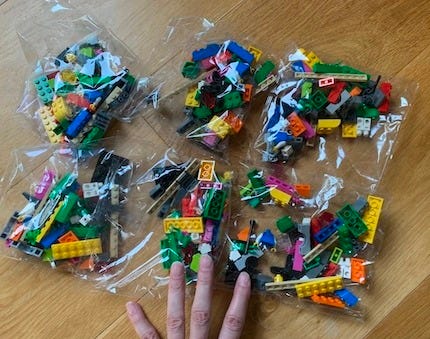
For this kind of event, you normally use LSP individual kits (~50 bricks each). Then everyone is working with the same set — there’s a fairness of bricks (see six kits pictured below):
However for my 150-person event, the host had already bought some of their own Lego, so we had a hodge-podge of bricks—and not very many—on each table.
I was worried. Scarcity—and competition for—“desirable bricks” can undermine a core tenant of LSP: psychological safety. To manage it I set some up-front expectations, noting that it was a taster session (only 45 minutes), so the amount of time and bricks were limited, and I asked everyone to limit their first build to about 12 bricks. That was my estimate for modest model sizes that would leave lose bricks on the table. It helped people attune to the number of bricks. From the tables at the front I could see how many bricks were “left over” and we upped the number of bricks-per-model a bit from there.
A few other elements were important in making this work. In addition to setting the “taster” expectation, I also reviewed the “ways of working” with the whole room, for example, “build quietly.” There were designated “table leads” and they provided feedback for their tables e.g. “hands up if your table is still building.” I talked through each activity and had slides up with the instructions.
An example of the feedback we got on this sessions was:
“I really enjoyed the Lego Serious Play session at the away day today. It’s very cleverly designed. We should consider using it for [redacted] and [redacted].”
Previously my largest group session was about 18 people. Scaling from 18 to 150 was a leap — but Lego Serious Play scaled with it. The bricks still sparked creativity, connection, and insight. That’s the magic of the method: it works whether your group is 2 or 200.
Lego Serious Play method — Explainer
Here’s a bit of background. It’s a highly facilitated, science-based method that’s been around for about 25 years. It uses model-building to enhance thinking, communication, and problem solving. LSP unlocks psychological safety for a group through a “skill building” warmup, underpinned by the social domains of status, certainty, autonomy, relatedness, and fairness (SCARF). The LSP method catalyzes creative exploration and discovery through “thinking with your hands.”
Eyes-hands
Thinking with your hands is powerful. People might experience this in the activity of handwriting or drawing (think of journaling). Further creative capabilities are unlocked when working with spatial relationships, textures, and colours.
This kind of thinking enhances creativity when it leads to “flow” states, where your brain relaxes its self-criticism to accept more new ideas. Connecting visual input with fine motor skills can also create and enhance neural connections and help stimulate different parts of your brain.
Science suggests that hands-on activities also improve memory and recall.
Some of the benefits resulting from LSP include:
Accessibility/attractiveness: a pile of bricks is less intimidating than a blank sheet
The bricks activate multiple ways of thinking and communicating and the physical models often help you surprise yourself
Level playing field: a safe space for exploration and creation, with focus on the ideas being expressed
Rapid results
Rich, textured knowledge and understanding
Models make people’s ideas and stories memorable
Compromise and therefore commitment once everyone feels heard
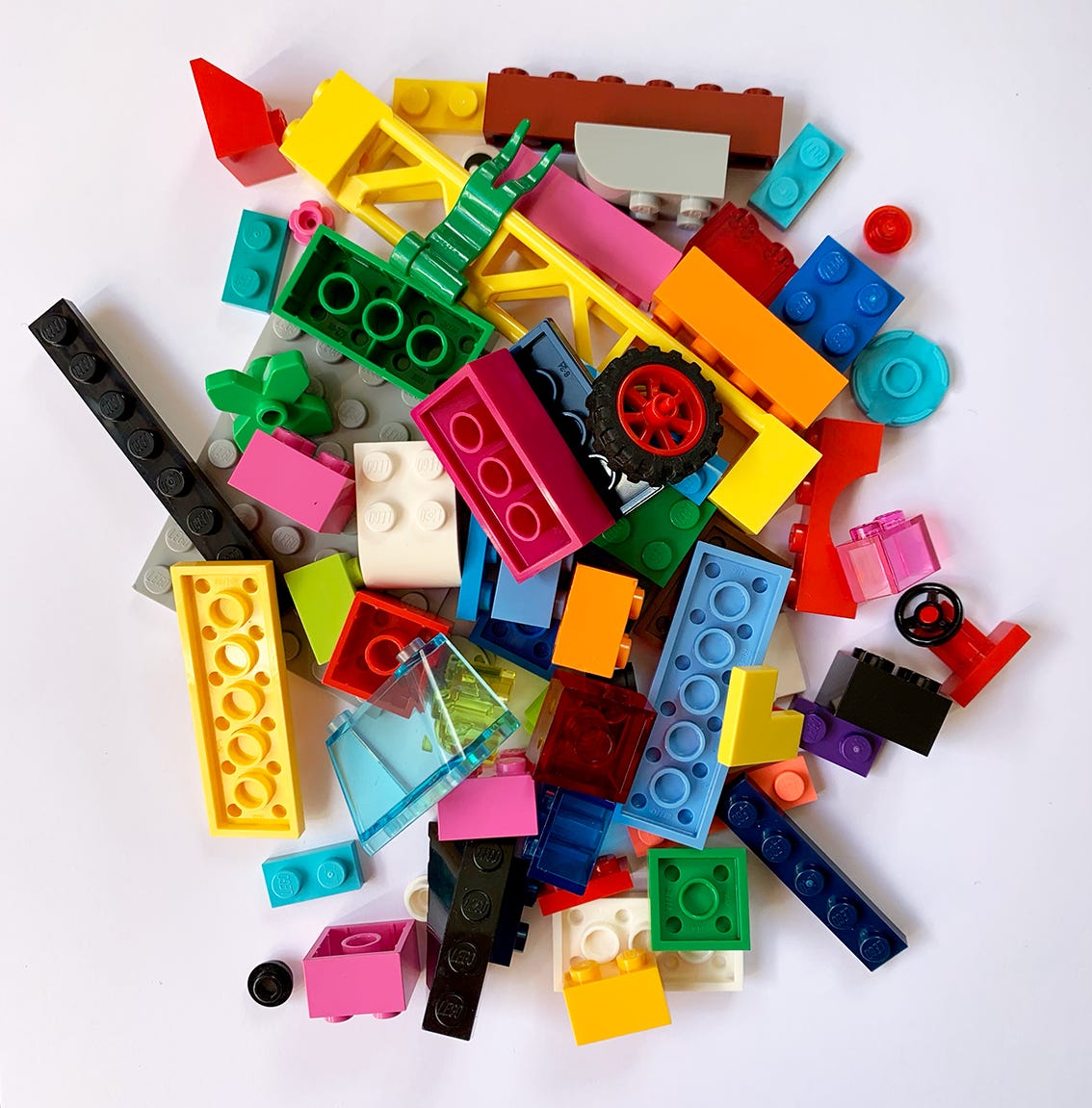
Use Lego Serious Play when you need:
Shared vision, for example partnership development, value proposition, goal-setting
Team building, for example employee on-boarding, exploring culture or values, employee engagement and expectations
Creative product/project ideas, for example using design thinking
Problem or challenge solutions such as improving workflow, addressing supply chain or technical hurdles, enhancing customer experience, learning from a retrospective, or figuring out how to get “unstuck”
Strategy or simple guiding principles in areas such as regulation, policy, or operations
Scenario development and testing for strategic planning or strategic goals, such as reaching a certain milestone by a certain date
It’s a tool that works! If you’re curious, let’s talk.